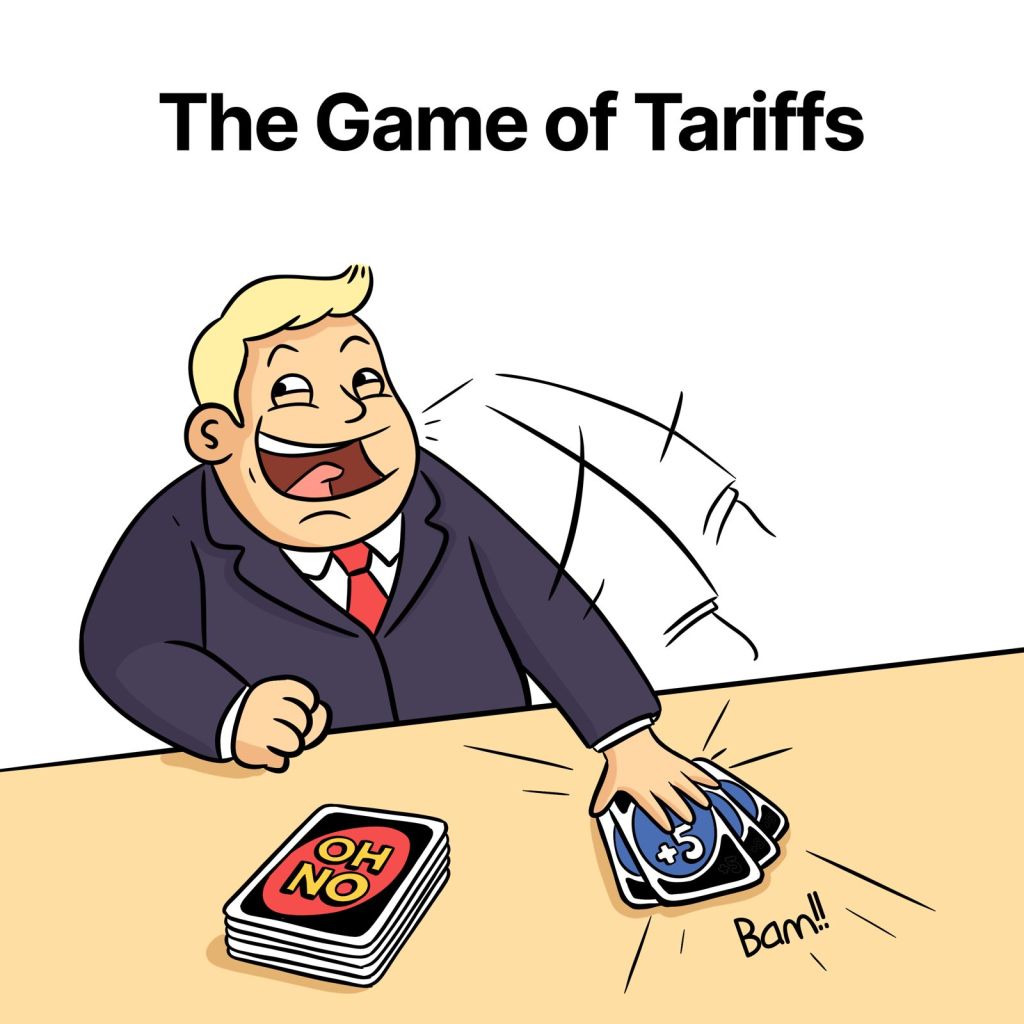
One of the most searched questions on Google right now is: “What is a tariff and how will Trump’s tariffs impact India?”
And I get it. Tariffs sound like some textbook term—until you realise it can decide whether your favourite Made-in-India kurta sells in New York, or ends up costing as much as a Gucci shirt.
What is a tariff and who pays for it?
Simply put, a tariff is a tax on imports. But the most common doubt—and the second-most Googled question—is: “Who pays tariffs?”
Here’s the truth: while the U.S. government imposes tariffs, the costs are shared. Indian exporters either cut margins to stay competitive, or American consumers pay more. In effect, tariffs are like an extra toll naka—everyone ends up slowing down and paying up.
The 50% tariff wall: Why it matters
As reported by the Financial Times and Times of India, Donald Trump announced a 25% reciprocal tariff on Indian goods, followed by another 25% penalty linked to India’s Russian oil imports. Together, this builds a 50% tariff wall around Indian exports.
According to the Global Trade Research Initiative (GTRI), India could face a $50 billion export hit if these tariffs persist. For a country trying to grow its global footprint, that’s no small number.
What happens to “Make in India”?
This is where it pinches. India’s ‘Make in India’ policy was designed to position us as the next manufacturing hub—a serious alternative to China. Electronics, textiles, pharmaceuticals, and gems were supposed to lead the way.
But a sudden 50% tariff on Indian goods in the U.S. market? That’s like reaching 49 runs in cricket and then getting bowled out on a no-ball. The dream doesn’t end, but the frustration is real.
The Wall Street Journal even noted: “Trump’s tariffs stymie India’s bid to steal manufacturing from China.” And they’re right.
Impact on Indian Market and Trade Deals
The ripple effect of a 50% U.S. tariff won’t stop at shipping ports—it will reach our stock markets, businesses, and trade negotiations.
📉 Indian Markets
- Export-heavy sectors (textiles, gems & jewellery, pharma, auto parts) will feel the immediate pressure.
- Stock market volatility is likely, with investor sentiment tied to U.S.–India trade news.
- The rupee could weaken if export revenues dip, putting pressure on India’s trade balance.
🤝 Trade Deals
- The ongoing India–US trade deal talks may stall—Trump has already hinted at “no new agreements” until tariffs are settled.
- India could accelerate FTAs with the EU, UAE, and ASEAN to reduce reliance on the U.S. market.
- Long-term, this might push India deeper into regional and South-South partnerships, from Africa to Latin America, reshaping our trade map.
The geo-politics of tariffs: More than just trade
Tariffs aren’t just economics—they’re geopolitics in disguise.
- India–US Relations: Once steady, now at risk of becoming purely transactional. Strategic trust could weaken if trade friction dominates.
- India–Russia Relations: The 25% penalty tied to Russian oil imports is a clear signal from Washington. But for India, balancing energy security with U.S. ties is a tightrope walk we can’t avoid.
- Global Trade Politics: Trump’s tariff nationalism could encourage other nations to bend WTO rules. For India, that means preparing for a less predictable, more protectionist world order.
Should India retaliate or diversify?
Many are asking: “Will India retaliate against Trump’s tariffs?”
- Retaliation: Bold, but risky. India’s counter-tariffs could trigger escalation into a mini trade war.
- Diversification: Smarter, but slower. Building strong markets in Africa, Southeast Asia, and Latin America is the safer bet.
Think of it like shaadi season: you can’t depend on just one buffet (the U.S. market). You need to explore the entire wedding calendar (multiple export destinations).
The way forward for India
So, what should India do?
- Short-term: Negotiate hard, seek sector-specific exemptions, and protect jobs.
- Long-term: Diversify exports, strengthen domestic demand, and make Make in India less dependent on the U.S. market.
- Geo-political balancing: Maintain strategic ties with Russia while not letting U.S. relations slip into pure friction.
Because tariffs may come and go, but India’s manufacturing dream—and its foreign policy ambitions—must outlast any single White House administration
In my opinion
Tariffs aren’t just about economics. They’re about exporters in Surat, IT workers in Bengaluru, consumers in Chicago, and policymakers in Delhi—all connected in one global story. And if Google searches tell us anything, it’s this: Indians don’t just follow cricket scores anymore—we want to decode trade, policy, and geopolitics with the same intensity.
What’s your thought?
Do you think India should retaliate against Trump’s tariffs or focus on diversifying exports? How will this tariff game reshape our foreign policy and India’s economic future?

 Abhijeet's Blog
Leave a reply to Anonymous Cancel reply