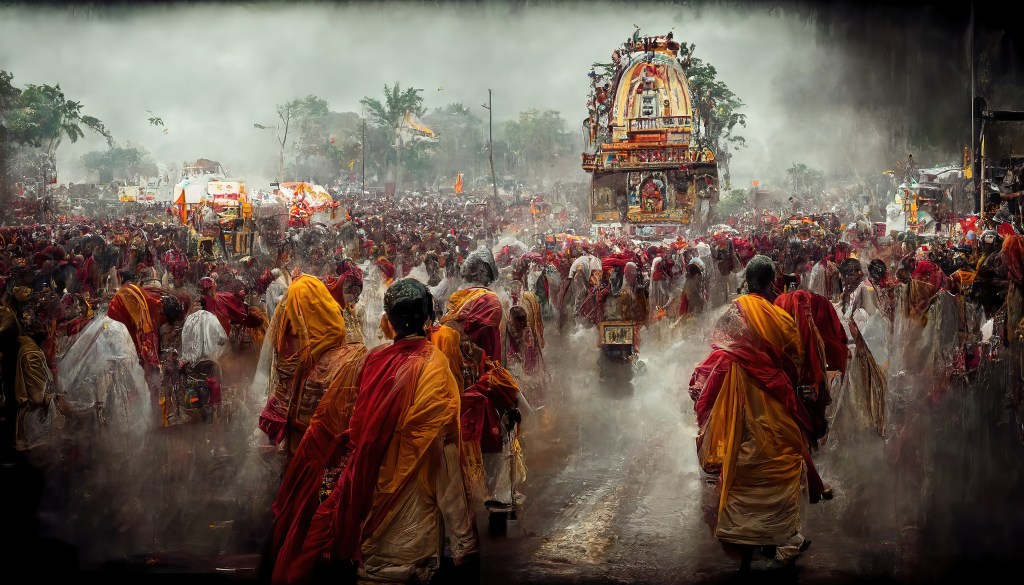
Imagine a sea of devotees, their faces glowing with joy, pulling towering chariots through vibrant streets—that’s the magic of the Rath Yatra, one of Hinduism’s most cherished festivals. This guide is crafted for you, especially younger readers, to feel the heartbeat of this sacred event and its deep roots in Sanatan Dharma.
What is the Rath Yatra?
The Rath Yatra, or “Chariot Festival,” is a vibrant Hindu celebration where a deity’s statue (murti) rides a grand wooden chariot (ratha) through the streets in a joyful procession (yatra). It’s like a divine parade, bringing gods closer to their people. The most famous Rath Yatra honors Lord Jagannath, a form of Lord Vishnu as Krishna, in Puri, Odisha, filling hearts with awe as devotees catch a glimpse (darshan) of the divine.
What is the Full Name of Rath Yatra?
It’s the Shree Jagannath Rath Yatra, a grand journey celebrating Lord Jagannath and his siblings, Balarama and Subhadra, in Puri.
What is a Rath Called in English?
A “rath” is a chariot—a massive, beautifully crafted vehicle that carries the deities, radiating devotion and splendor.
Where is the Most Famous Rath Yatra Held?
The grandest Rath Yatra unfolds in Puri, Odisha, at the 12th-century Jagannath Temple, a stunning masterpiece of Kalinga architecture. Every summer, in Ashadha (June or July), millions gather, their hearts united in devotion, to witness this sacred spectacle.
What is the Real Story of Rath Yatra?
Picture a divine family road trip: Lord Jagannath, with his brother Balarama and sister Subhadra, travels from Puri’s Jagannath Temple to the Gundicha Temple, 2 miles away. In Sanatan Dharma, Jagannath is Krishna, who chose Puri as his home in the Kali Yuga, the current era. Their unique wooden statues—carved from neem wood with large, soulful eyes—ride massive chariots, a sight that fills devotees with wonder. Every 12 years, these statues are lovingly replaced, symbolizing life’s eternal cycle of renewal, a moment that feels both sacred and deeply moving.
What Are the Three Rath Names?
The Puri Rath Yatra features three majestic chariots:
- Nandighosha (“Cry of Joy”): Jagannath’s chariot, with 16 wheels, soaring 45 feet high.
- Taladhvaja (“Palm Tree Flag”): Balarama’s chariot, with 14 wheels.
- Devadalana (“Crusher of Gods”): Subhadra’s chariot, with 12 wheels.
Visual Idea: Picture an infographic showing these chariots side by side, with their names and wheel counts, to bring their grandeur to life!
What is the Importance of the Yatra?
The Rath Yatra is a celebration of unity and love. Like a king visiting his people, the deity leaves the temple to bless everyone, no matter their background. This inclusivity, a core Sanatan Dharma value, touches hearts, especially for those who can’t enter the temple. The sight of thousands pulling the chariots together is a powerful reminder that we’re stronger united, filling the air with hope and devotion.
What is the Spiritual Meaning of Rath Yatra?
The Rath Yatra is a journey of the soul. It reminds us that God reaches out to us, just as we seek Him, creating a bond that feels warm and eternal. Pulling the chariots symbolizes life’s challenges—tough but conquerable with faith and community. The renewal of the deities’ statues reflects Sanatan Dharma’s belief in life’s cycles, inspiring us to embrace growth with a hopeful heart.
How Did the English Word “Juggernaut” Originate?
The word juggernaut, meaning an unstoppable force, comes from “Jagannath.” British colonizers were awestruck by Puri’s massive chariots and the festival’s unstoppable energy, giving us a word that captures the festival’s breathtaking power.
What Happens During the Puri Rath Yatra?
The festival begins with heartfelt rituals. The deities are bathed publicly, and devotees are sprinkled with sacred water, a moment of shared joy. The local king sweeps the chariots with a golden broom, a humble act that warms the heart. After a brief rest, the deities are placed on their towering chariots, and thousands of devotees, their voices rising in chants, pull them to the Gundicha Temple. After a week, the deities return to the Jagannath Temple, adorned in gold, as crowds cheer in celebration.
Rath Yatra Around the World
The Rath Yatra’s spirit travels far beyond Puri. Similar festivals light up Ahmedabad (Gujarat), Shrirampur (West Bengal), and Nepal, where the Rato Machindranath Jatra blends Hindu and Buddhist traditions. Jainism celebrates Mahavira’s birthday with a Rath Yatra, and some Christians in Tamil Nadu use chariots for their festivals. Across the globe, the Hindu diaspora brings this joy to cities, uniting communities in a shared celebration of faith.
What is the Conclusion of Rath Yatra?
The festival ends with the deities’ triumphant return to the Jagannath Temple, leaving hearts full of joy and unity. It’s a reminder that divinity embraces everyone, inspiring us to carry this spirit of love and togetherness forward.
Reflections from Social Informer
At Social Informer (socialinformer.data.blog), I’m always moved by the Rath Yatra’s magic. As a kid, I’d watch videos of Puri’s towering chariots, my eyes wide with awe, feeling like I was part of something huge. This festival isn’t just tradition—it’s a celebration of unity, love, and inclusivity that speaks to today’s generation. Like a music festival or community march, it brings people together, showing that when we join hands, we create something divine. I invite you to reflect: What’s a moment when you felt connected to something bigger? Share your thoughts on Social Informer—I’d love to hear your story!
Article facts from: britannica.com
 Abhijeet's Blog
Leave a comment