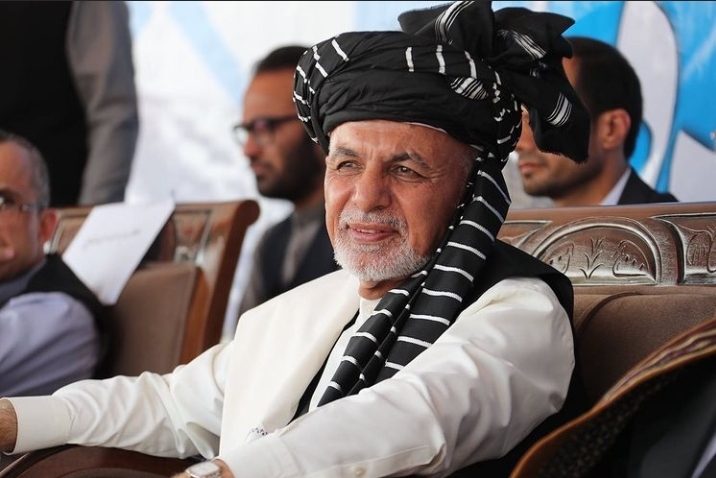
Ashraf Ghani, a hapless leader who caved in to the Taliban and turned Afghanistan’s hope into despair
Ghani fled Afghanistan on August 15 after writing a lengthy post addressed to the people of the country on Facebook. Reports suggests he has either fled to Tajikistan or Uzbekistan
Afghan president Ashraf Ghani dreamed of transforming his country from a tribal, patronage-based society to a modern technocratic state. It was to achieve this that he gave up his US passport to run for the presidency in 2009. However, his term abruptly ended on 15 August, more than three years before his second term was due to expire, when he fled the country as Taliban insurgents took over Kabul. Here’s a look at a difficult rise and a humiliating end to Ghani’s presidency.
Embattled Afghan president flees countryy
The exiled Afghanistan president may ultimately be remembered as someone who made little headway against the deep-rooted government corruption, who failed to make headway with the Talibans and abandoned the country when it needed him probably most. Even in the weeks as Taliban fighters were overrunning districts across the country, he appeared to be either in shock or denial. He made no public statements about the conflict and gave no news conferences. About the conflict and gave no news conferences.
On Saturday, the government broadcast a brief video in which Ghani praised the Afghan security forces and declared they had the fortitude to win. He made no mention of resigning. Afghan chairman of the High Council for National Reconciliation Abdullah Abdullah has said, “The fact that the former Afghan president left the country and put the people and country in such a bad situation, God will hold him accountable and the people of Afghanistan will also judge him.”
Life before he was President Ghani
Before becoming the president in 2014, Ghani enjoyed a stellar career abroad as an academic and economist focused on failed states, only returning 24 years later to pursue his dream of rebuilding the country.
He studied at New York’s Columbia University, before teaching in the United States during the Soviet occupation of Afghanistan in the 1980s.
He worked with the World Bank from 1991, becoming an expert on the Russian coal industry, and finally moved back to Kabul as a senior UN special adviser soon after the Taliban were routed in late 2001.
In the days that followed, he was a key architect of the interim government and became a powerful finance minister under President Hamid Karzai from 2002 to 2004, campaigning hard against burgeoning corruption.
Afghanistan under Ghani
During his presidency, Ghani managed to appoint a new generation of young, educated Afghans to leadership positions at a time the country’s power corridors were occupied by a handful of elite figures and patronage networks. He promised to fight rampant corruption, fix a crippled economy and transform the country into a regional trade hub between Central and South Asia, but was unable to deliver on most of those promises.
Taliban fighters entered Kabul and President Ashraf Ghani left Afghanistan saying he wanted to avoid bloodshed, signalling the end of a 20-year Western experiment aimed at remaking Afghanistan.
The city was gripped by panic, with helicopters racing overhead throughout the day to evacuate personnel from the US embassy. Smoke rose near the compound as staff destroyed important documents, and the American flag was lowered. Several other Western missions also prepared to pull their people out.
Afghans fearing that the Taliban could reimpose the kind of brutal rule that all but eliminated women’s rights rushed to leave the country, lining up at cash machines to withdraw their life savings. The desperately poor – who had left homes in the countryside for the presumed safety of the capital – remained in parks and open spaces throughout the city.
As the Taliban closed in on Sunday, President Ashraf Ghani flew out of the country.
“The former president of Afghanistan left Afghanistan, leaving the country in this difficult situation,” said Abdullah Abdullah, the head of the Afghan National Reconciliation Council. “God should hold him accountable.”
Ghani later posted on Facebook that he had chosen to leave the country to avert bloodshed in the capital, without saying where he had gone. Media later reported that Ghani left for Uzbekistan.
Ghani said he believed “countless patriots would be martyred and the city of Kabul would be destroyed” if he had stayed behind.
“The Taliban have won … and are now responsible for the honour, property and self-preservation of their countrymen,”
Though the Taliban had promised a peaceful transition, the US embassy suspended operations and warned Americans late in the day to shelter in place and not try to get to the airport.
In a stunning rout, the Taliban captured 26 of Afghanistan’s 34 provincial capitals since August 6, despite the billions of dollars spent by the US and NATO over nearly 20 years to build up Afghan security forces.
“I think everyone accepted it would be some sort of deal that would not involve Ashraf Ghani himself,” he said. “But I don’t think anyone anticipated that he would have left the country completely and so quickly.”
McBride said it was generally accepted that the Taliban would have to include some elements of the previous administration in any agreement in order to gain any kind of legitimacy and be accepted by the wider international community.
“In a cosmopolitan city like this there are many people who do not want a return of the old style of Taliban government,”.
Through the news source & article information taken from Aljazeera.
Abhijeet.
 Abhijeet's Blog
Leave a comment